
LEADERSHIP & CULTURE
AI Is Getting Smarter. Are We Becoming Better Leaders?
As artificial intelligence transforms the workplace, are we paying enough attention to developing the people who lead alongside it?
Written October 2026
AI can write reports, analyse data, predict trends and make decisions faster than most of us ever could.
But can it inspire someone who's lost confidence? Navigate a difficult conversation? Recognise when the right decision isn't necessarily the easiest one?
These are the kinds of questions that emerged during discussions at the Africa HR Summit 2026 (AHRS2026), where the relationship between artificial intelligence and human-centred leadership was firmly on the agenda.
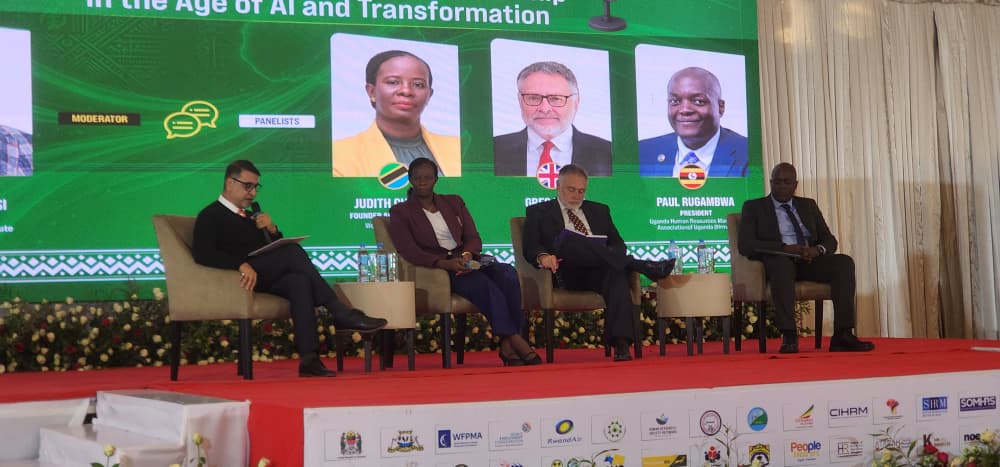
Strategic Human-Centered Leadership in the Age of AI and Transformation – Africa HR Summit 2026
THE BIGGER QUESTION
Technology might make an organisation faster. It doesn't necessarily make it better.
The technology is moving. Are we?
There's no shortage of conversations about what AI will do to the workplace. Which jobs will disappear? Which skills will become obsolete? How much more productive could organisations become?
They're important questions, but they only tell part of the story. Introducing new technology doesn't automatically create a better organisation.
You can have the most sophisticated systems in the world and still have a culture where people don't feel heard, managers struggle to make decisions, and teams are reluctant to challenge the status quo.
The things AI can't do for us
At AHRS2026, Greg Young, CEO and Co-Founder of LeaderShape Global, joined a panel exploring Strategic Human-Centered Leadership in the Age of AI and Transformation, moderated by Murtaza G. Versi, CEO of LeaderShape Global Africa.
One of the central questions was what becomes more important about being human as AI advances.
It's tempting to answer with a list of skills: empathy, creativity, emotional intelligence and ethical judgement. But there's something more fundamental at stake.
AI can provide information. It cannot take responsibility for the kind of organisation we choose to create.
It cannot decide what values should guide a business, whether people feel safe speaking up, or how leaders respond when commercial pressures conflict with doing the right thing.
Those remain human choices. And as technology gives us more power, those choices become more consequential.
Perhaps we're asking the wrong question
Much of the conversation around AI focuses on what technology can do. But what if we spent just as much time asking what leaders need to do differently?
How do you lead a team when the nature of its work is changing? How do you build trust when people are uncertain about their future? And how do you create a culture where technology is embraced without losing the human relationships that make organisations work?
These aren't questions that can be answered by installing another system. They require leaders who understand themselves, recognise their impact on others and can balance performance with empathy, ethics and authenticity. Technological transformation needs to be accompanied by leadership and cultural transformation.
Why this conversation matters for Africa
For Africa, the opportunities presented by AI and digital transformation are significant. But the challenge isn't simply adopting the latest technology.
It's about developing the skills, confidence, leadership and organisational cultures needed to shape how that technology is used.
How does Africa move from being a consumer of transformation to becoming a creator of transformation?
That's about much more than digital capability. It's about empowering people to think differently, challenge assumptions, make decisions and create opportunities.
And it raises an important question for organisations everywhere: are we developing people simply to adapt to change, or giving them the confidence and capability to shape it?

The future of work is also the future of leadership
At LeaderShape Global, we believe that effective leadership goes beyond technical capability and individual performance.
It requires self-awareness, ethical judgement, authenticity and the ability to create cultures where people can flourish.
These principles are central to Transpersonal Leadership – and they become even more relevant as organisations navigate the opportunities and uncertainties of AI.
As LeaderShape Global Africa develops its work across the continent, we're looking forward to continuing these conversations with leaders and organisations facing these challenges.
Because while technology will undoubtedly change how we work, people will still determine why we work, how we work together and what kind of future we create.
AI is getting smarter. The question is whether we're investing just as much in becoming better leaders.
AI is evolving. Is your leadership keeping pace?
As technology transforms the workplace, self-awareness, emotional intelligence and ethical judgement are becoming increasingly important. LEIPA (Leadership and Emotional Intelligence Performance Accelerator) helps leaders understand their strengths, recognise areas for development and explore how their leadership impacts others.
Discover LEIPA →