

LEADERSHIP INSIGHTS
Authentic Leadership: Being Yourself While Adapting to Others
Originally written by Danielle Grant, March 2021
Updated October 2026
Authenticity is widely recognised as an important quality in effective leadership. Yet what does it really mean to be authentic, particularly when leaders must adapt to different people, situations and expectations?
For many years, leadership was associated with a relatively narrow set of behaviours and characteristics. Women and others who did not fit traditional leadership stereotypes often felt pressure to adopt styles that were not necessarily natural to them in order to progress.
Although expectations of leadership have evolved, the challenge of balancing authenticity with adaptability remains.
Effective leaders need to understand who they are, what they stand for and how their behaviour affects others. At the same time, they must be able to adapt their approach to meet the needs of different individuals and circumstances.
This is where the concept of the authentic chameleon becomes particularly relevant.
What Does Authentic Leadership Really Mean?
Authenticity is not simply something a leader can claim to possess. It is experienced and judged by others through their actions, decisions and relationships.
When leaders consistently demonstrate the values they communicate, people are more likely to perceive them as genuine and trustworthy.
However, authenticity does not mean behaving in exactly the same way in every situation or expressing every thought and emotion without consideration.
Leadership involves understanding context, recognising the needs of others and choosing how best to communicate and act.
The challenge is to make these adjustments without compromising our underlying values, beliefs or integrity.
Authenticity Is Demonstrated, Not Declared
Authentic leadership is about ensuring that what we say, what we believe and how we behave are aligned – while remaining flexible enough to respond effectively to the people and situations around us.
The Authentic Chameleon
I use the term authentic chameleon to describe a leader who can adapt their approach to different circumstances without losing their essential identity.
A chameleon changes its colour in response to its environment, but it remains a chameleon.
Similarly, we all have different aspects of our personalities, experiences and capabilities that we can draw upon depending on the situation.
An effective leader recognises which aspects of themselves will help them connect with others and respond appropriately, while remaining true to their fundamental values.
This ability to adapt is particularly valuable in today's diverse, interconnected organisations, where leaders may work with people from different cultures, generations, professional backgrounds and perspectives.
Being an authentic chameleon is not about pretending to be someone else. It is about having the self-awareness and emotional intelligence to bring forward the most appropriate aspects of who we genuinely are.
Authenticity and REAL Leadership
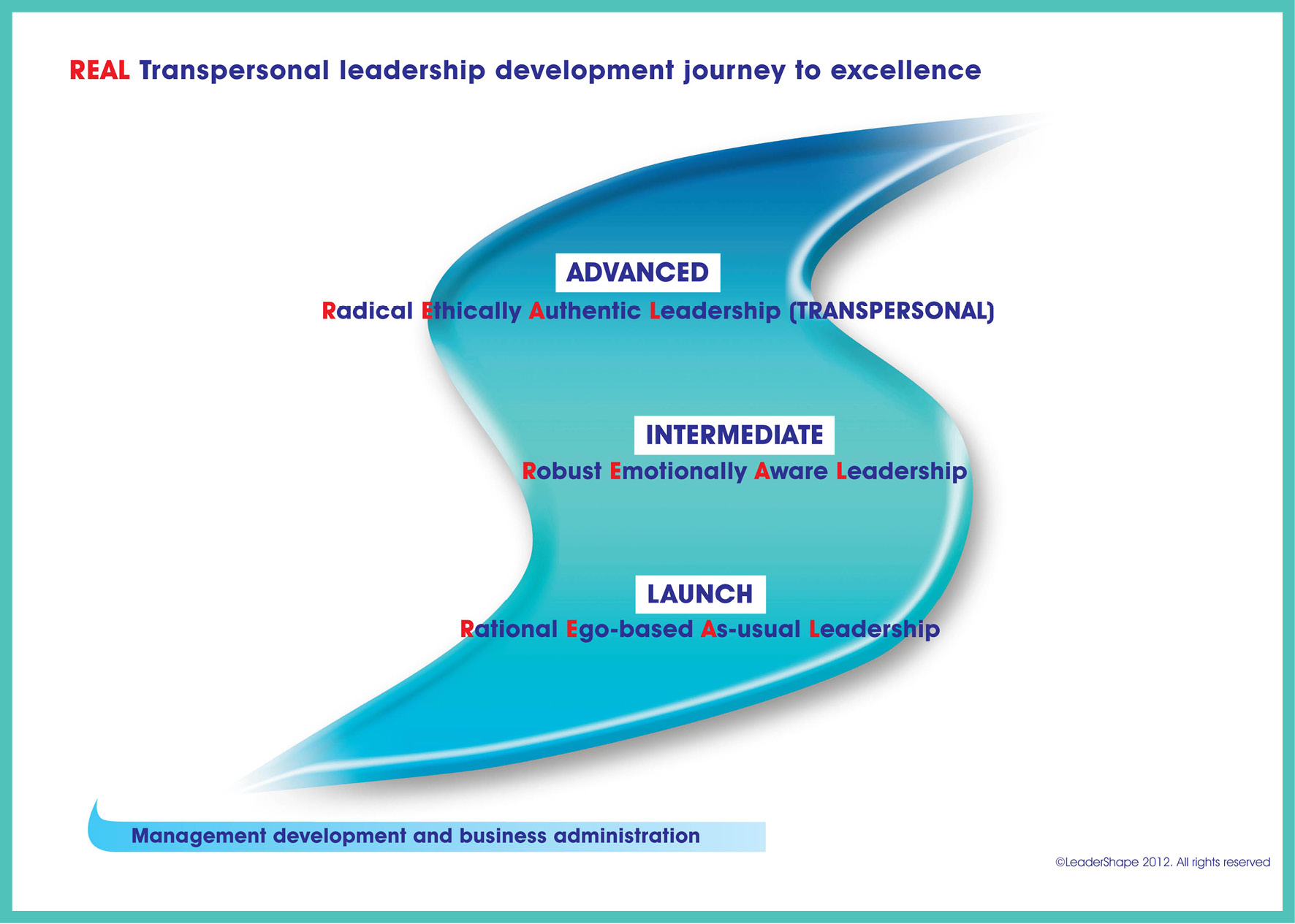
Authenticity is essential to effective leadership, but it is only one part of a broader set of capabilities and behaviours.
At LeaderShape Global, we describe excellent leaders as REAL – Radical, Ethical, Authentic Leaders.
These leaders also demonstrate emotional and spiritual intelligence, care for others and a commitment to lifelong learning.
REAL leaders recognise that leadership is not simply about personal success or individual authority. It is about creating environments where people feel valued, included and empowered to contribute.
They seek to align organisational purpose with ethical decision-making, sustainable performance and the interests of a wider range of stakeholders.
This approach is central to Transpersonal Leadership – leading beyond the ego and considering the broader impact of our decisions and behaviour.
A Personal Experience: Finding My Own Leadership Style
Earlier in my career, when I headed the Sales and Marketing team at Disney, I reported to a Managing Director whose approach to leadership was very different from my own.
He was a rugby-playing, sociable leader who believed that relationships were built through late nights in the bar at conferences and rounds of golf with colleagues.
As someone who neither drank nor played golf, I knew that trying to replicate his approach would feel unnatural and inauthentic.
I needed to find a way to lead the team that reflected my own personality, values and strengths, while still earning their trust and respect.
One of the challenges I inherited involved improving administrative processes and reporting standards within the sales team.
Rather than delivering a formal lecture or adopting an unnecessarily confrontational approach, I decided to use humour.

With seven men in the sales team and myself as the only woman, I created a cartoon based on Snow White and the Seven Dwarves.
The comparison was intended to be light-hearted, drawing a parallel between Snow White encouraging the dwarves to improve their personal hygiene and my efforts to encourage the team to improve their administrative habits.
Despite concerns that the approach might not be taken seriously, the message was well received.
The team understood what needed to change, and the humour helped communicate the message without creating unnecessary resistance.
Most importantly, I had approached the situation in a way that was authentic to me rather than attempting to imitate someone else's leadership style.
Authenticity in Today's Leadership Environment
The importance of authentic leadership has become even more apparent as organisations navigate rapid technological development, changing expectations and increasingly diverse working environments.
Hybrid working, digital communication and artificial intelligence have changed how leaders interact with their teams and how decisions are made.
Yet the fundamental human need for trust, understanding and meaningful connection remains.
Leaders must be able to communicate clearly, acknowledge uncertainty and demonstrate that their decisions are consistent with the values they promote.
Authenticity also involves recognising that different people may need different approaches to communication, feedback and support.
Adapting to those needs does not make a leader less authentic. When done thoughtfully and with integrity, it can strengthen relationships and improve leadership effectiveness.
Six Ways to Develop Authentic Leadership
Authenticity requires ongoing reflection and development. It is not something that can be achieved simply by deciding to be more genuine.
The following practices can help leaders develop greater self-awareness and bring more authenticity to their leadership.
1. Know Yourself
Develop a deeper understanding of your strengths, limitations, motivations and the different aspects of your personality.
2. Understand Your Values and Purpose
Reflect on what matters most to you and ensure that your decisions and behaviour are consistent with those principles.
3. Be Comfortable Being Yourself
Recognise your own value while remaining attentive to the needs and perspectives of others.
4. Share Your Experiences
Appropriate personal stories and self-disclosure can help others understand you and strengthen genuine connections.
5. Remain Grounded
Avoid allowing status or authority to distance you from others. Stay open to different viewpoints and constructive challenge.
6. Acknowledge What You Don't Know
Be willing to admit mistakes, ask questions and draw on the knowledge and experience of those around you.
Authenticity and Leading Beyond the Ego
Authenticity is closely connected to the development of Transpersonal Leadership.
Leaders who are driven primarily by the need to protect their status, maintain control or gain recognition may find it difficult to act authentically when their assumptions or authority are challenged.
Leading beyond the ego involves recognising these tendencies and developing the self-awareness to make more conscious choices.
It also means considering the impact of our decisions on colleagues, organisations, communities and wider society.
An authentic leader does not need to have every answer or maintain an image of perfection. They need the confidence to remain true to their values while continuing to learn, adapt and respond to others.
Be Yourself – and Be Willing to Adapt
Authenticity is not as simple as always saying exactly what we think or behaving in the same way regardless of circumstances.
It requires self-awareness, emotional intelligence and the ability to balance personal integrity with an understanding of others.
The authentic chameleon recognises that flexibility and authenticity are not opposites. We can adapt our approach while remaining true to our essential values and beliefs.
For leaders seeking to create inclusive, ethical and sustainably successful organisations, developing this capability is an important part of becoming a REAL and Transpersonal Leader.
Develop Your Authentic Leadership
Discover more about REAL Leadership and the development of Transpersonal Leadership in Leading Beyond the Ego: How to Become a Transpersonal Leader, by John Knights, Danielle Grant and Greg Young.
Explore the Book →About the Author
Danielle Grant is a Director of LeaderShape Global, an experienced leadership coach and facilitator, and co-author of Leading Beyond the Ego: How to Become a Transpersonal Leader. She has extensive experience in senior corporate leadership and leadership development, and is a host of LeaderShape's Leadership Comes Alive podcast series.